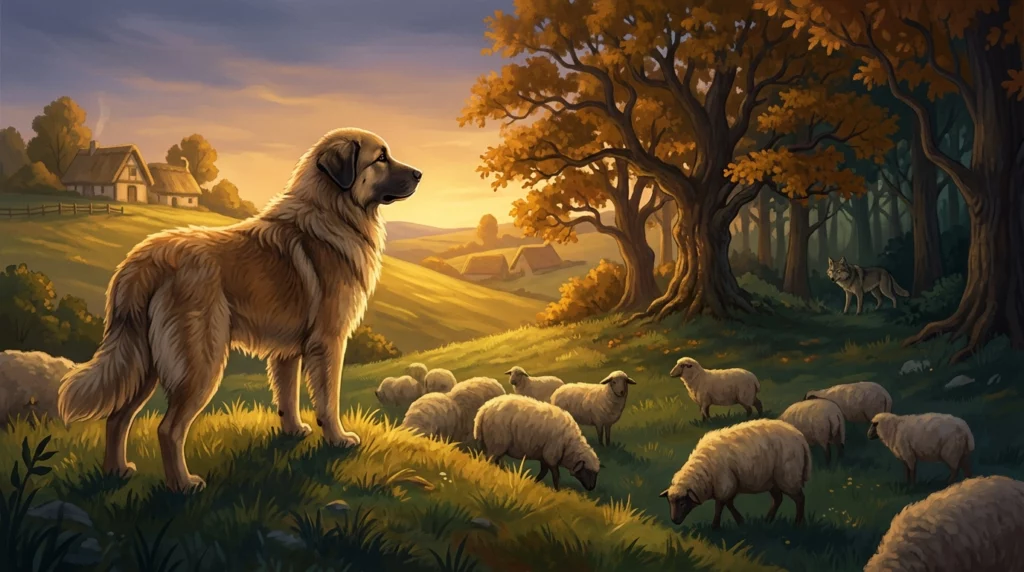
Blu here, reporting for duty! As a proud French rescue pup—a Griffon Bleu de Gascogne with extra-floppy ears and a nose that simply refuses to turn off—I spend a lot of time thinking about two things: dropped dinner scraps, and what my working ancestors were up to back in 17th-century France. When my human teammates at SnoutScoop handed me a stack of classic literature by Jean de La Fontaine, my tail started beating a wild rhythm on the floor.
If you aren’t familiar with La Fontaine, he was France’s master fable writer. He loved using animals to poke fun at human foolishness, political drama, and social habits. But when it came to livestock guardian dogs, how did he actually portray us? Were guard dogs heroic protectors, tragic victims, or tactical pawns caught between hungry wolves and naive sheep? Grab your favourite chew toy, because we are sniffing out the truth behind La Fontaine’s flock guardians and the real history of France’s working dogs.
1. The Ear-Cropping Dilemma: Le Chien à qui on a coupé les oreilles
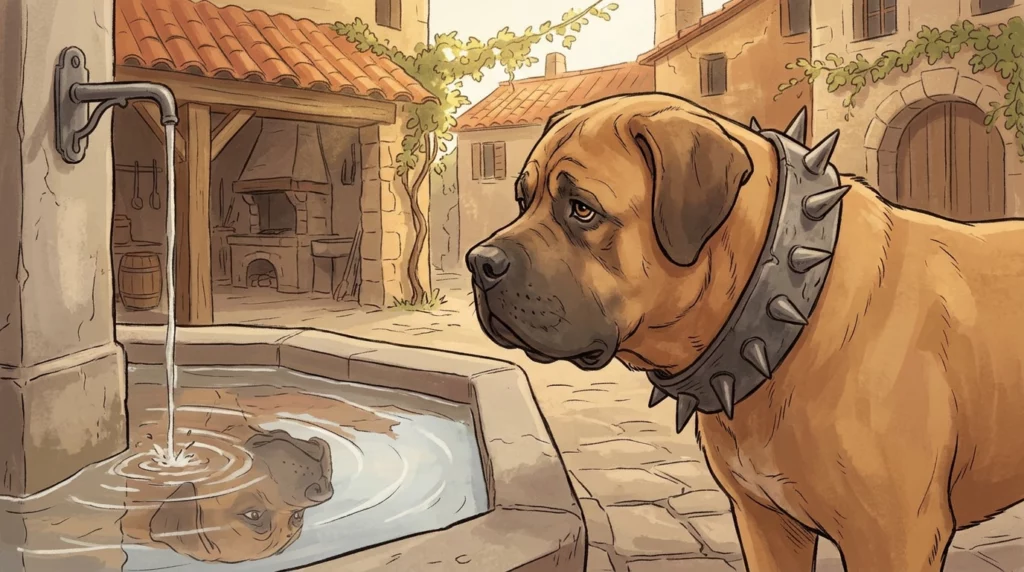
Let’s start with a fable close to my heart (and my ears): Le Chien à qui on a coupé les oreilles (“The Dog with Cropped Ears”). As documented in literary archives and French historical analysis on Wikipedia, this fable features a young Mastiff named Jupin who is utterly horrified when his human master trims his ears.
Jupin cries out against what feels like cruel, unnecessary torture. Who would steal a dog’s gorgeous, velvety ear flaps? But the fable takes a sharp turn when Jupin goes to work protecting the flock against local wolves. During a fierce battle, Jupin discovers a huge tactical advantage: a wolf’s favourite trick is grabbing a guard dog by his floppy ears! With short ears, Jupin gives the wolf nothing to latch onto, while his spiked collar protects his throat. Jupin realizes his master wasn’t being cruel; he was equipping him for survival in brutal terrain.
As a dog who adores his long ears, the thought of shears makes me want to hide under the sofa. But historical guard dogs were strictly working warriors. La Fontaine showed that what looks like harsh treatment on the surface was often functional armor for dogs doing serious duty against apex predators.
2. The Tragic Deal: Les Loups et les Brebis
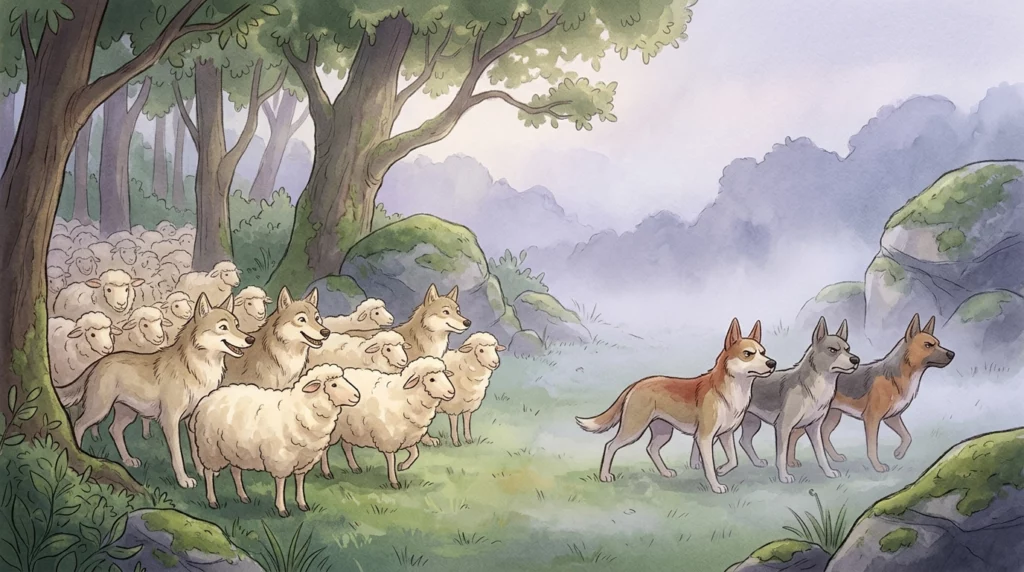
Now, if you want a fable where dogs are the absolute key to survival, look no further than The Wolves and the Sheep (Les Loups et les Brebis). This story is a masterclass in why you should never fire your security team.
In this fable, after centuries of constant warfare, the wolves offer the sheep a peace treaty. The wolves say, “We can all be friends! But first, you have to hand over your ferocious guard dogs as hostages. They are the real problem—they bark constantly and cause all the tension.” The sheep, being terribly naive, agree to the deal. They trade away their brave canine guardians to seal the truce.
You can probably guess what happens next. The moment the guard dogs are locked away and out of the picture, the wolves pounce on the defenseless flock and devour every single sheep. La Fontaine’s moral was aimed at human politics—warning nations never to disarm or abandon their true defenders for fake promises of peace—but to me, it reads as the ultimate homage to working dogs. We are the thin, furry line between safety and chaos!
3. Comfort vs. Freedom: Le Loup et le Chien
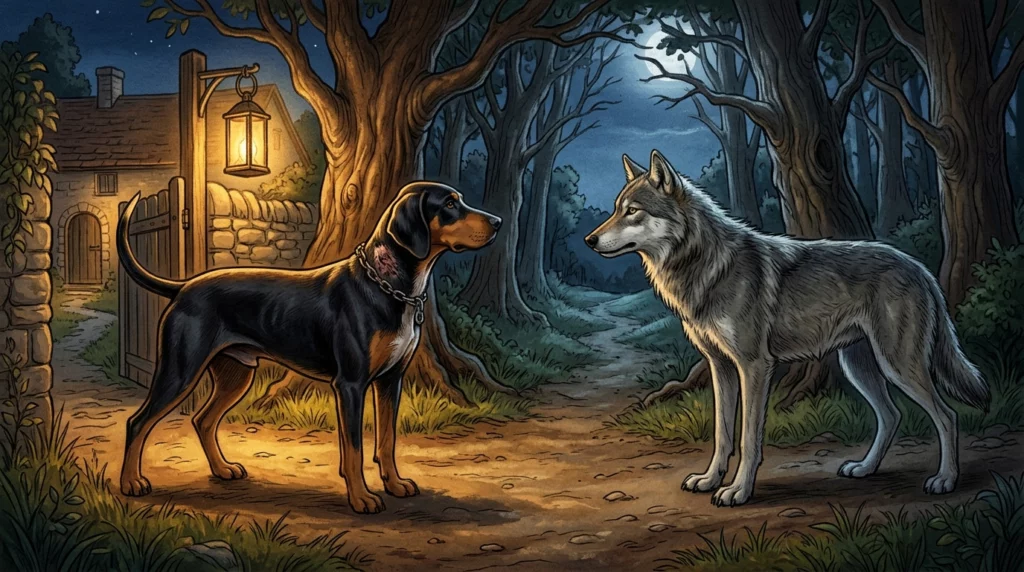
Another iconic tale featuring a guard dog is The Wolf and the Dog (Le Loup et le Chien). In this story, a starving, skinny wolf runs into a sleek, well-fed Mastiff who guards a wealthy estate. The wolf is amazed by the dog’s shiny coat and filled-out ribs, and the dog gladly invites the wolf to join him: all he has to do is guard the house, chase off intruders, and earn endless scraps from the master’s table.
The wolf is almost sold on the sweet deal until he notices a bare patch of rubbed fur on the dog’s neck. When the wolf asks about it, the guard dog casually admits it’s just the mark where his collar and chain tie him up during the day. The wolf stops dead in his tracks, turns around, and trots back into the cold forest, deciding that a free belly full of wild hunger is better than a gold collar on a leash.
As a rescue dog who loves both roaming free in the yard and sleeping on a plush sofa, this story hits home! La Fontaine captures the real dual nature of the working dog: loyal, well-cared-for, and deeply valued, yet bound by duty and human control.
4. Real History: From Mountain Pastures to Royal Palaces
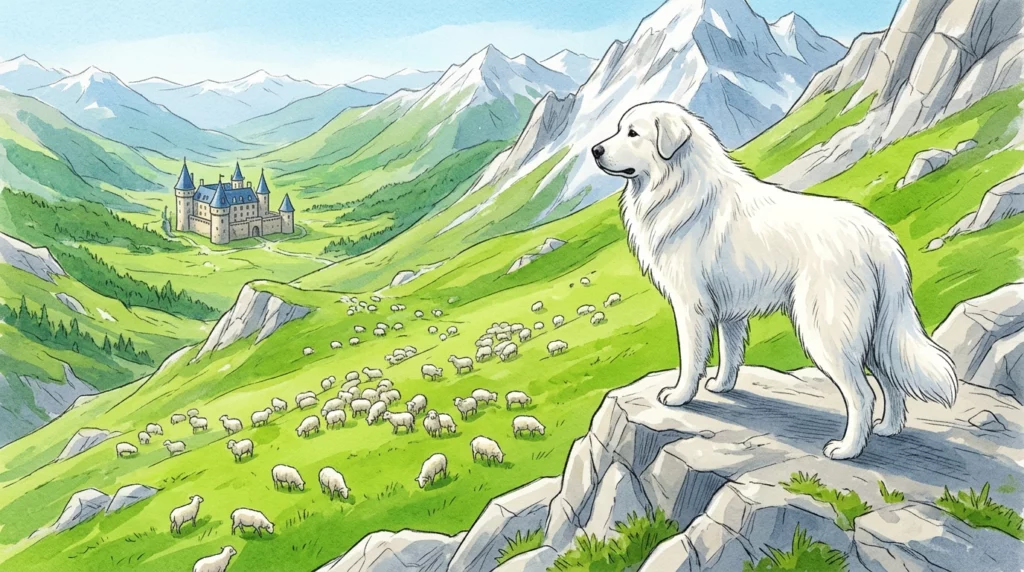
La Fontaine wasn’t just pulling these canine characters out of thin air. In 17th-century France, livestock guardian dogs were vital living tools for rural survival. Breeds like the Pyrenean Mountain Dog (known in North America as the Great Pyrenees) were actively patrolling high mountain pastures to keep sheep safe from wolves and bears.
According to the detailed historical records at Du Val de Pyrene and the American Kennel Club’s breed history, these massive white guardians had been working the slopes for thousands of years. But right around the time La Fontaine was publishing his fables, something amazing happened: in 1675, King Louis XIV’s son, the Grand Dauphin, fell in love with a Pyrenean Mountain Dog while visiting the region and brought one back to the court of Versailles!
Virtually overnight, the French aristocracy adopted these rugged mountain flock guardians as fashionable estate guards and royal companions. The breed was officially designated the “Royal Dog of France.” So while sheep farmers relied on them to keep wolves at bay, French lords used them to patrol grand châteaux—proving that real-life guard dogs were absolute heroes both on the slopes and in the palace halls.
Blu’s Final Verdict: Heroes Through and Through
So, was La Fontaine portraying guard dogs as heroes or traitors? In my book, we come out looking like absolute champions. When humans in fables listened to their dogs, kept their ears safe, and trusted their protective instincts, everybody stayed safe. When humans traded away their dogs for cheap promises, things went downhill fast!
Whether we’re guarding royal châteaux, protecting mountain sheep, or just keeping a loud, watchful eye on the neighborhood squirrel population from the living room window, dogs have spent centuries taking our jobs seriously. Now, if you’ll excuse me, all this historical research has given me a heroic appetite. Time to guard the kitchen counter!