Hello, fellow curious souls! It’s Yuna here—your resident two-year-old feline adventurer, professional shelf-explorer, and unofficial coordinator of household chaos. Normally, I spend my days testing gravitational physics by nudging small objects off counters or watching our dog Blu attempt to catch his own tail. But recently, I stumbled across a story from the 17th century that blew my tiny mind.
It turns out that back in 1678, the famous French poet Jean de La Fontaine wrote a fable about dogs tackling an impossible problem with what can only be described as ultimate, chaotic dog energy. The fable is titled Les Deux Chiens et l’Âne mort (“The Two Dogs and the Dead Donkey”), and it raises a fascinating question: would a dog really try to drink an entire ocean just to get a snack?
The Fable: Drinking the Ocean for a Floating Feast
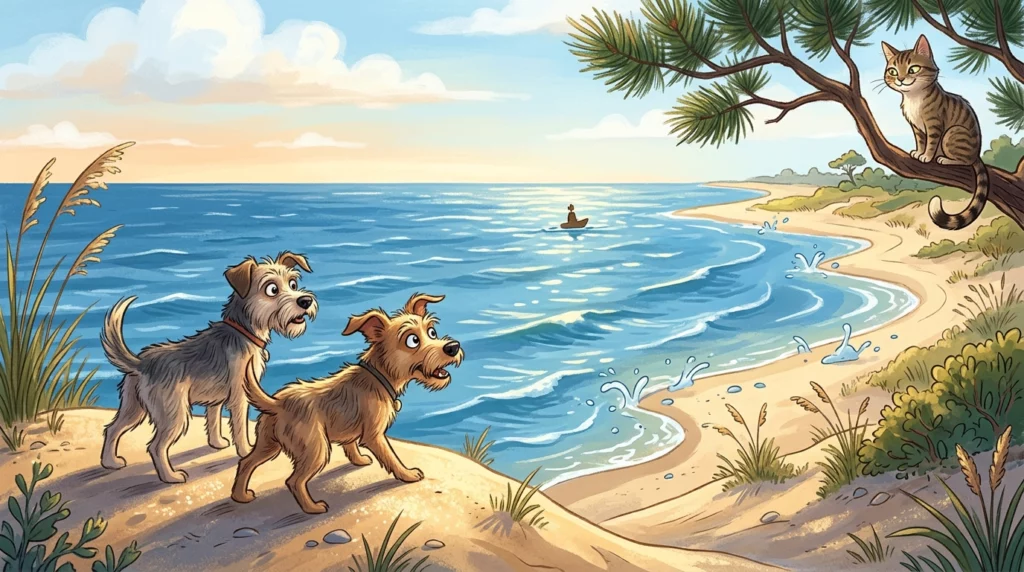
Here is the setup according to La Fontaine’s classic fable: Two dogs are strolling along the seashore when they spot something tempting floating far out in the waves—a dead donkey. Naturally, to a hungry canine, a floating feast sounds delightful. The only minor inconvenience? The entire Atlantic Ocean is sitting right between them and their meal.
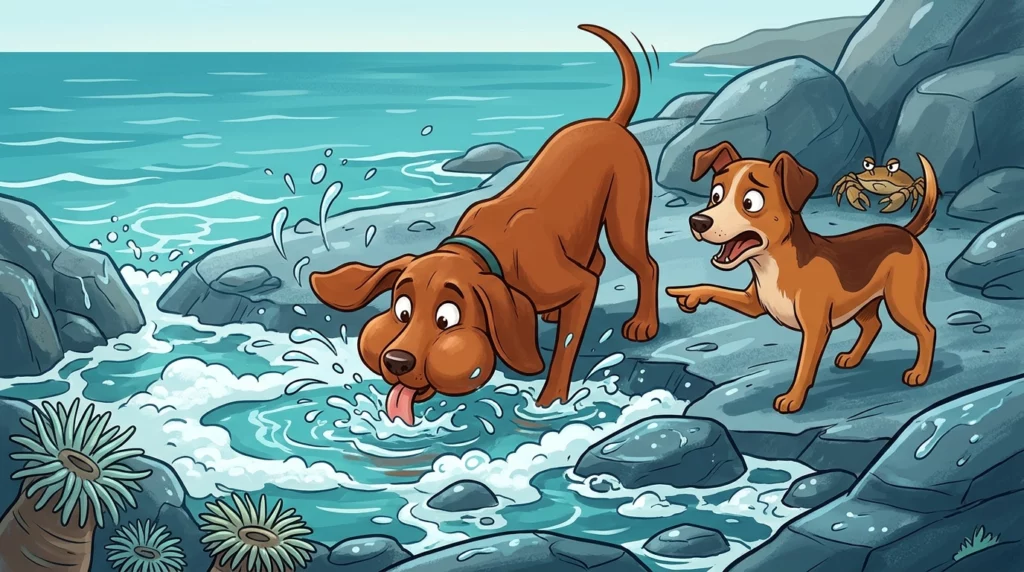
Now, a cat in this situation would simply shrug, judge the ocean for being excessively wet, and go take a nap in a sunny spot. But in La Fontaine’s tale, one of the dogs comes up with a grand, ambitious plan: “Hey! If we drink up all this water, the seabed will dry out, and we can just walk over and get our dinner!”
So, the two dogs start lapping up saltwater with unhinged enthusiasm. As La Fontaine dryly notes in historical collections of his work—such as those archived on Public Library UK and analyzed in literary studies on OpenEdition Books—the poor dogs drink and drink until they literally burst before making even a tiny dent in the shoreline.
“C’est Pas la Mer à Boire”: From Fables to French Idioms
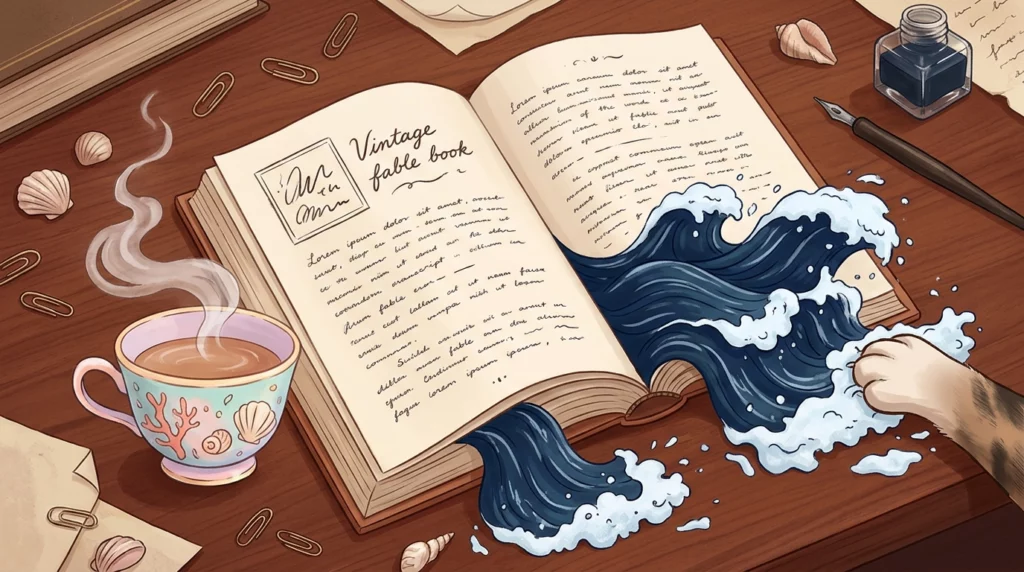
While La Fontaine was using dogs to poke fun at human greed and overambitious projects, the imagery of drinking the ocean sank deep into European culture. In fact, it helped popularize one of France’s most famous everyday expressions: “C’est pas la mer à boire” (literally, “It’s not the sea to drink”).
As explained by language experts at The Connexion and The Idioms, the phrase is used to tell someone that a task isn’t as difficult or impossible as they are making it out to be—much like reminding them they aren’t actually being asked to drain an entire ocean. When someone grumbles about taking out the trash or wiping down the counters, a French speaker might toss out this handy idiom to put things in perspective.
Fable Satire vs. Real Canine Reality
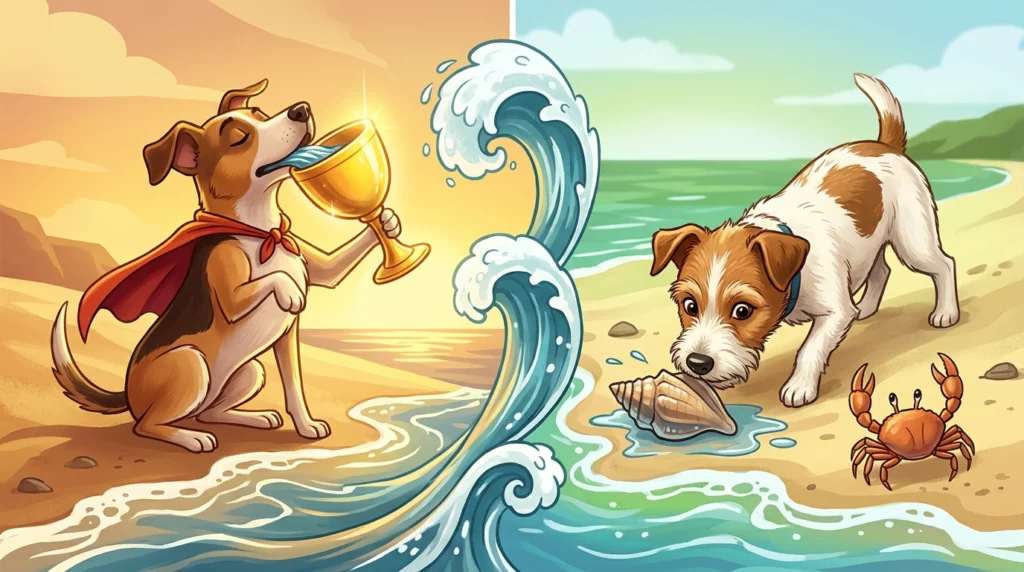
As a cat who lives with Blu, I have to admit: when I first read this fable, I chuckled. Watching Blu sprint full speed into a screen door makes you think, “Yeah, drinking the ocean sounds like a very Blu thing to attempt.” Dogs possess a legendary, unwavering optimism when food is involved.
However, as much as La Fontaine’s story makes for great literary satire, is it fair to real dog logic? Would a real dog actually attempt such an absurd scheme?
To answer that, we have to look past 17th-century moral tales and look at modern animal behavior. In reality, dogs are far more sophisticated problem solvers than the fable suggests.
What Science Says About Dog Problem-Solving
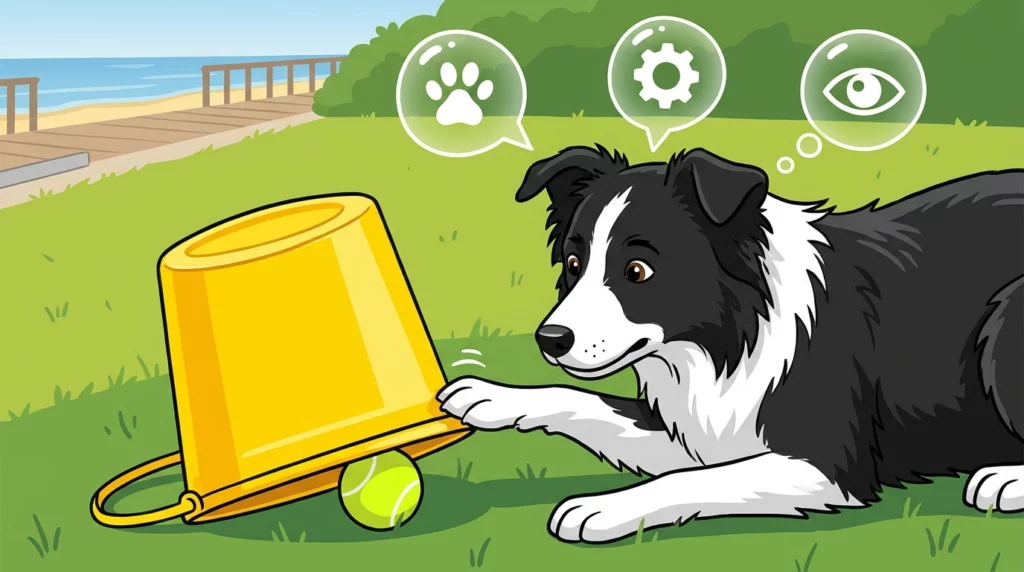
According to comparative cognition studies published in PubMed Central (PMC), dogs exhibit complex cognitive abilities when facing physical challenges. Unlike the fable’s dogs who blindly drank until disaster struck, real dogs evaluate spatial obstacles, understand physical barriers, and adapt their strategies based on immediate feedback.
When a dog encounters an unreachable reward—say, a treat trapped under a couch or floating in water—they generally use three distinct stages of problem-solving:
- Direct physical trial: Pawing, reaching, or swimming directly toward the target.
- Social referral: Looking back at their human companion for assistance—a unique evolutionary skill where dogs treat humans as tool-users and problem-solvers.
- Alternative navigation: Walking around barriers rather than trying to brute-force impossible physical obstacles.
In fact, research shows that when dogs realize a task is physically impossible for them, they rarely persist to the point of self-harm. Instead, they pivot to social communication—glancing between the out-of-reach object and their human’s eyes to ask for help.
Why We Love the Myth of “Dog Logic”
So why did La Fontaine pick dogs for his fable about impossible ambition? Because dogs represent boundless desire and single-minded focus. When Blu smells bacon, his whole universe shrinks down to that single strip of breakfast perfection. He doesn’t think about logistical constraints; he thinks about bacon.
La Fontaine’s fable wasn’t really insulting dogs—it was using their charmingly direct nature to mirror human folly. Humans often take on absurd, overwhelming tasks (like trying to clean the entire house in five minutes before guests arrive) because we get blinded by the end goal.
Final Thoughts from a Feline Adventurer
As much as I enjoy poking fun at my canine housemates, I have to give credit where it’s due. Blu might try to bark down a thundercloud, but if he saw a tasty snack floating in the ocean, he wouldn’t try to drink the sea. He’d jump right in, doggy-paddle over, realize the water tastes weirdly salty, and then swim back to ask Niki or our humans to handle it.
So the next time you’re facing a massive project and feel like you’re trying to lap up the Atlantic, take a breath, remember La Fontaine’s fable, and remind yourself: ce n’est pas la mer à boire!