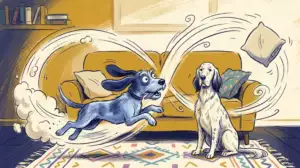
Encounters on walks
Meeting another dog on a walk does not have to end in a greeting. Explore distance, routes, lead management and moving away together to make room for each dog's comfort.
Training mode
Encounters on walks
Questions covered in this exam
- Two dogs approach on a narrow path and yours looks tense. What is useful early on?
- Another handler asks for space. Your dog is friendly. What should you do?
- Must a pleasant walk include greeting every dog?
- Crossing a road would create distance from a dog. What comes first?
- You allow someone to greet your dog, but it backs away. What now?
- How should the lead help during a managed encounter?
- Your dog notices a trigger but can still follow you easily. When can you turn away?
- How could you use a parked vehicle during a difficult encounter?
- A runner approaches; your dog often lunges at moving people. What is sensible?
- An unfamiliar loose dog approaches yours. Which request is useful?
- Which route is easier to adapt for a dog needing distance?
- An approaching dog is very small. Does that make a greeting suitable?
- Your dog calmly notices another dog and looks back at you. What can you do?
- Your dog coped in this park last week but struggles today. What should guide you?
- One dog starts withdrawing during a greeting. How should it end?
- Where should you first practise moving away together on cue?
- Someone insists their dog will teach yours manners. Yours hides behind you. What is appropriate?
- After an upsetting encounter, what is a reasonable next plan?
- Is one fixed distance enough for every dog encounter?
- Repeated lunging makes walks unsafe despite careful planning. What next?