
Communicating with a senior dog

Communication can adapt as hearing, vision or movement changes. Explore cues, positioning and comfortable learning with senior dogs, including when missed signals may call for a health assessment rather than more training.

Training mode

Communicating with a senior dog

0 / 20 answered

  1. 1. A guest wants to interact with your dog who cannot see. What should the briefing emphasise?

    A guest wants to interact with your dog who cannot see. What should the briefing emphasise?
  2. 2. What distinguishes a request cue from a reward marker?

    What distinguishes a request cue from a reward marker?
  3. 3. Your deaf dog becomes worried when you disappear unnoticed. What may help?

    Your deaf dog becomes worried when you disappear unnoticed. What may help?
  4. 4. Hearing and vision both appear to decline. What is the soundest approach?

    Hearing and vision both appear to decline. What is the soundest approach?
  5. 5. Your dog starts missing familiar visual cues and bumping into things. What comes before assuming a training problem?

    Your dog starts missing familiar visual cues and bumping into things. What comes before assuming a training problem?
  6. 6. Why avoid a reward-marker word used constantly in unrelated conversation?

    Why avoid a reward-marker word used constantly in unrelated conversation?
  7. 7. A deaf dog faces away when you give a familiar hand cue. What should you change first?

    A deaf dog faces away when you give a familiar hand cue. What should you change first?
  8. 8. A blind dog with useful hearing cannot see your visual reward marker. Which adaptation makes sense?

    A blind dog with useful hearing cannot see your visual reward marker. Which adaptation makes sense?
  9. 9. What is a useful goal for adapting communication in later life?
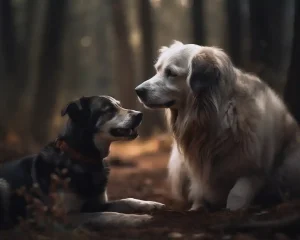
    What is a useful goal for adapting communication in later life?
  10. 10. A dog does not understand a newly introduced signal. What is useful?

    A dog does not understand a newly introduced signal. What is useful?
  11. 11. When marking a comfortable action, what makes the message clearer?

    When marking a comfortable action, what makes the message clearer?
  12. 12. A familiar sit is uncomfortable for this senior. What should a reward session use?

    A familiar sit is uncomfortable for this senior. What should a reward session use?
  13. 13. A senior dog sees a new reward gesture for the first time. Does it already mean “correct”?

    A senior dog sees a new reward gesture for the first time. Does it already mean “correct”?
  14. 14. A senior walks away from a short practice session. What is appropriate?

    A senior walks away from a short practice session. What is appropriate?
  15. 15. Does teaching an obstacle-warning word make an open stairwell safe for a blind dog?

    Does teaching an obstacle-warning word make an open stairwell safe for a blind dog?
  16. 16. Where should an unfamiliar communication exercise begin?

    Where should an unfamiliar communication exercise begin?
  17. 17. You consider a light signal to attract a deaf dog’s attention. What must you avoid?

    You consider a light signal to attract a deaf dog’s attention. What must you avoid?
  18. 18. One carer uses an open hand for “wait”, another for “come”. What needs agreeing?

    One carer uses an open hand for “wait”, another for “come”. What needs agreeing?
  19. 19. A blind dog learns a useful verbal cue. What has improved?

    A blind dog learns a useful verbal cue. What has improved?
  20. 20. A dog manages a familiar room but struggles in another setting. Does that rule out reduced vision?

    A dog manages a familiar room but struggles in another setting. Does that rule out reduced vision?
Questions covered in this exam
  1. A deaf dog faces away when you give a familiar hand cue. What should you change first?
  2. One carer uses an open hand for “wait”, another for “come”. What needs agreeing?
  3. A senior dog sees a new reward gesture for the first time. Does it already mean “correct”?
  4. A blind dog with useful hearing cannot see your visual reward marker. Which adaptation makes sense?
  5. What distinguishes a request cue from a reward marker?
  6. A familiar sit is uncomfortable for this senior. What should a reward session use?
  7. A guest wants to interact with your dog who cannot see. What should the briefing emphasise?
  8. Why avoid a reward-marker word used constantly in unrelated conversation?
  9. A dog does not understand a newly introduced signal. What is useful?
  10. Your deaf dog becomes worried when you disappear unnoticed. What may help?
  11. Your dog starts missing familiar visual cues and bumping into things. What comes before assuming a training problem?
  12. A dog manages a familiar room but struggles in another setting. Does that rule out reduced vision?
  13. Where should an unfamiliar communication exercise begin?
  14. You consider a light signal to attract a deaf dog’s attention. What must you avoid?
  15. A senior walks away from a short practice session. What is appropriate?
  16. A blind dog learns a useful verbal cue. What has improved?
  17. Does teaching an obstacle-warning word make an open stairwell safe for a blind dog?
  18. Hearing and vision both appear to decline. What is the soundest approach?
  19. When marking a comfortable action, what makes the message clearer?
  20. What is a useful goal for adapting communication in later life?

Further reading

SnoutScoop Newsletter

A little more dog in your inbox

Stories, discoveries and things to learn about dogs. Get news from SnoutScoop in your preferred language.