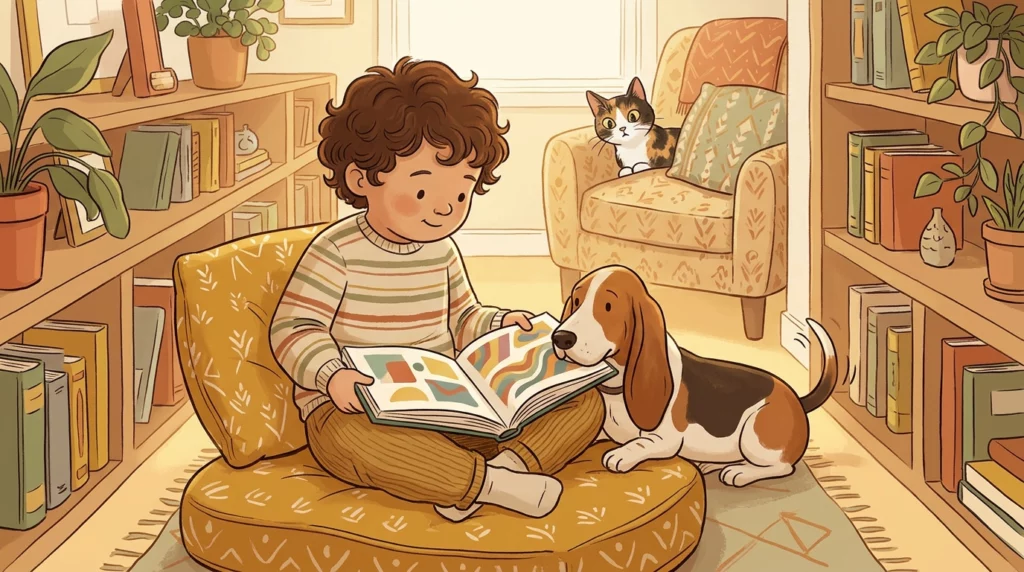
Hello, curious humans! Yuna here—SnoutScoop’s resident two-year-old feline adventurer, professional paper-rustler, and official investigator of mysterious noises. Normally, my relationship with books involves carefully testing whether they slide smoothly off the coffee table. But recently, I witnessed something truly fascinating: a young human curled up on a floor cushion, reading a story aloud to a resting dog.
The dog didn’t interrupt. He didn’t correct a single mispronounced word. He just rested his chin on the child’s knee, thumping his tail whenever the page turned. As a cat who appreciates quiet curiosity, I had to investigate. It turns out that reading to dogs isn’t just an adorable cozy-afternoon activity—it’s a scientifically backed educational superpower that helps children overcome literacy challenges and fall in love with reading.
The Power of a Non-Judgmental Audience
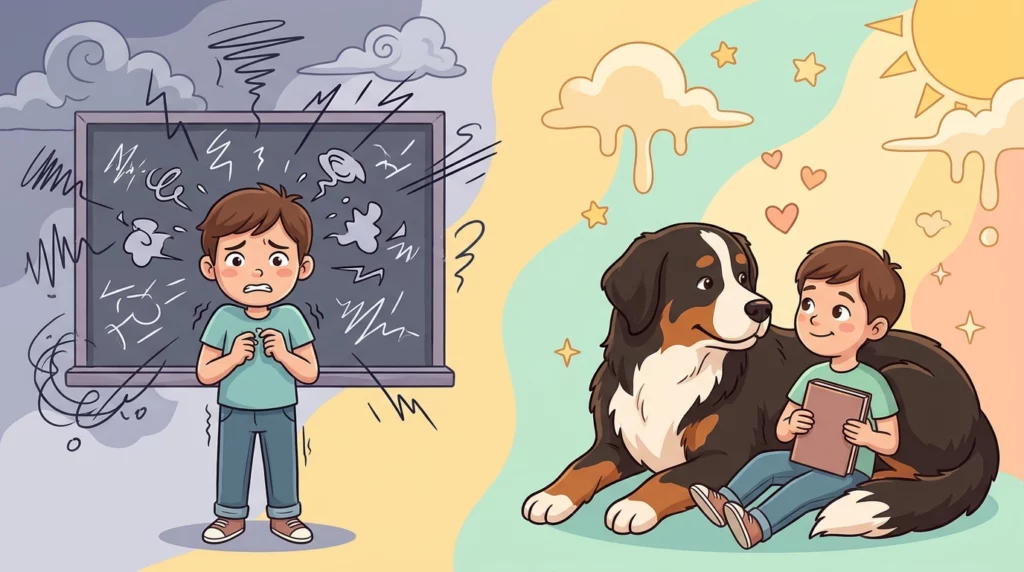
Learning to read aloud can be terrifying for a young child. When reading to adults or peers, kids often feel intense pressure. They worry about tripping over big words, stuttering, or being corrected every few seconds. That anxiety can transform reading from an exciting adventure into a nerve-wracking chore.
Enter the dog.
Dogs are world-class listeners. They don’t care if you pronounce “dinosaur” wrong, flip two pages by accident, or read at a tortoise-like pace. According to insights shared by the Burlington County Library System, reading to a trained therapy dog provides children with a safe, non-judgmental environment where they can practice without fear of failure. When the social anxiety of reading disappears, children feel free to take risks, sound out tough words, and build genuine reading fluency.
The International Literacy Association emphasizes that this judgment-free space is particularly transformative for reluctant readers. Instead of associating books with frustration, children begin to associate reading with warmth, comfort, and positive companionship.
What Science Says About Canine Literacy Buddies
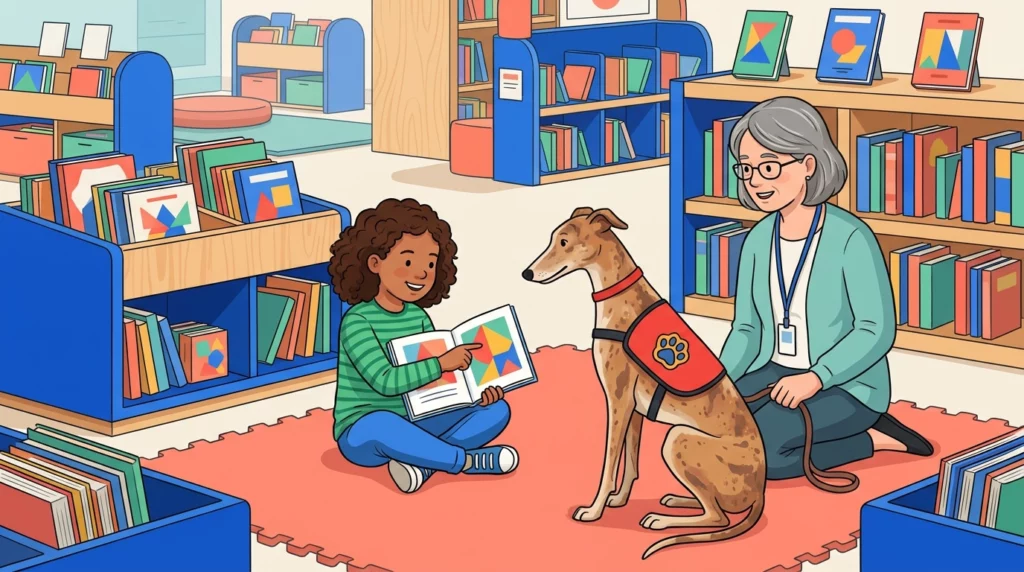
If you think this sounds too cute to be effective, science has some surprising news for you. Researchers have been studying canine-assisted literacy programs for years, and the evidence is overwhelming.
A landmark study from Tufts University evaluated second-grade students who read aloud to therapy dogs during a summer program. The researchers found that children who read to dogs maintained or improved their reading skill levels and developed significantly better attitudes toward reading, whereas students who didn’t read to dogs experienced a decline in reading skills over the summer break.
Beyond academic performance, the physical presence of a dog creates measurable physiological benefits. As highlighted in research on human-animal interactions and reported by Romper, petting a calm dog lowers cortisol (the stress hormone) and reduces blood pressure. When a child’s body is calm, their brain is far better equipped to process language, comprehend context, and retain new vocabulary.
Supporting Children with Learning Differences
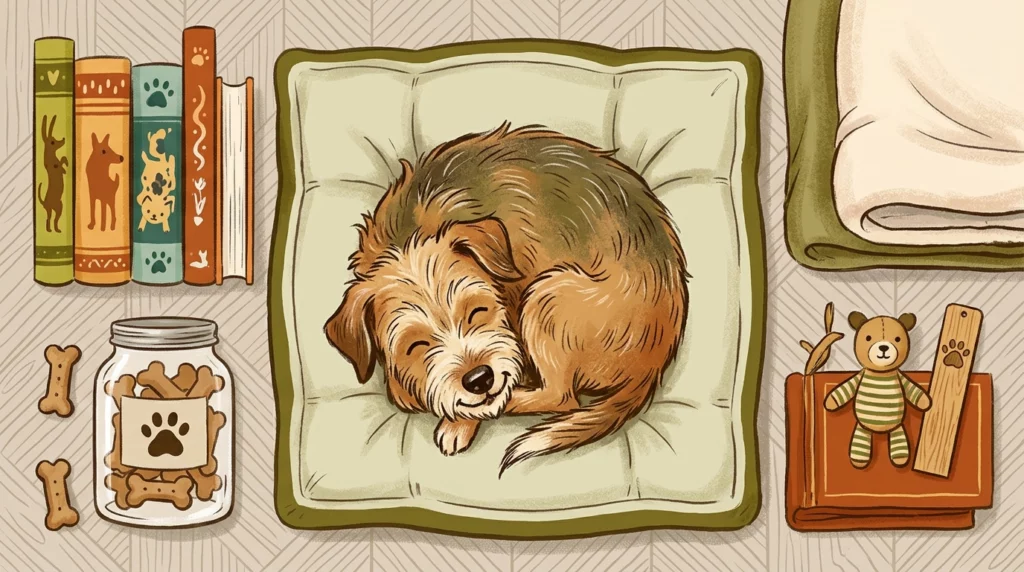
Canine reading programs show especially dramatic results for children dealing with learning differences, speech impediments, or neurodivergent challenges. Organizations like Special Needs Resource Directory highlight how therapy dogs offer emotional support to kids navigating dyslexia, ADHD, or autism spectrum conditions.
For a child who struggles with speech fluency, a dog’s calm, steady presence acts as a soothing anchor. In the UK, Therapy Dogs Nationwide places registered therapy dogs in school classrooms to help pupils regulate their emotions, boost self-esteem, and engage enthusiastically with literary activities.
Similarly, Assistance Dogs Australia reports that reading to dogs unleashes a child’s confidence by shifting the dynamic from performance to connection. The child isn’t being evaluated—they are sharing a story with a loyal friend.
How a Canine Reading Session Works
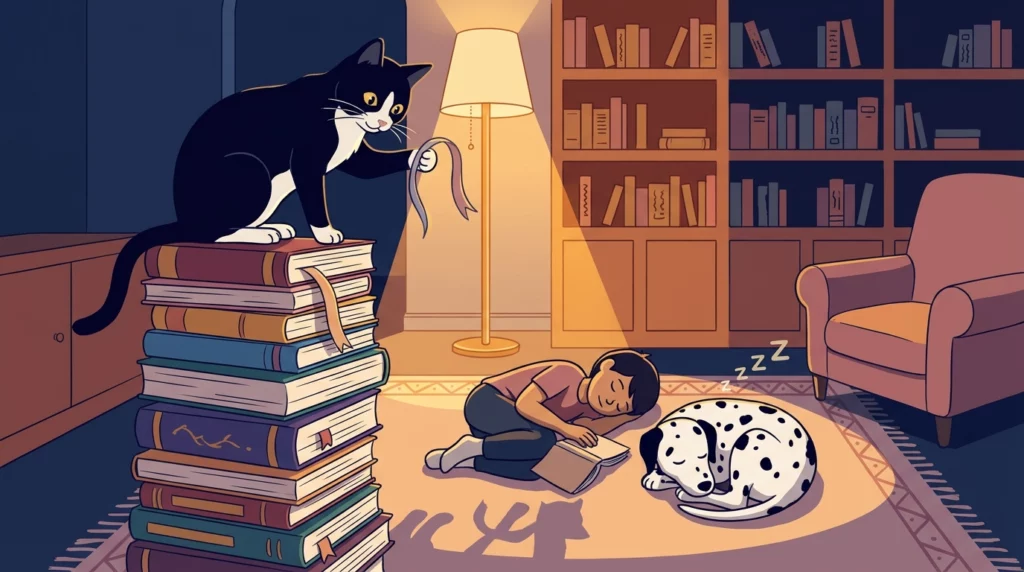
What actually happens during a dog-assisted reading session? Whether in a local library or a primary school classroom, the setup is delightfully simple:
- A Cozy Environment: A quiet corner with soft cushions, rugs, and minimal distractions.
- A Certified Therapy Dog: Dogs chosen for these programs are thoroughly vetted for calm demeanors, gentle temperaments, and patience.
- A Trained Handler: The handler stays nearby to ensure safety and keep the dog happy, but stays largely silent to keep the focus entirely on the child and dog.
- Child-Led Pacing: The child picks the story and reads at their own speed. If they want to stop and show the dog pictures, they can!
Dogs often respond to reading in endearing ways—heavy sighs of satisfaction, resting heads in laps, or gentle tail wags at exciting moments. Children interpret these natural canine behaviors as active listening and encouragement!
How to Try Reading to Your Dog at Home
You don’t need a formal library program to enjoy these benefits. If you have a furry family member at home, you can easily set up your own reading session. Here are a few quick tips from a curious cat who has watched this in action:
- Time It Right: Pick a time when your dog is already calm and tired, such as after a good walk or a backyard game of fetch. A hyper dog chasing a tennis ball makes a terrible listening buddy!
- Create a Snuggle Nook: Set up a comfortable blanket spot on the floor so your child and dog are at eye level.
- Let Your Child Choose: Let the young reader select any book they love—picture books, graphic novels, or chapter books.
- Keep Adults in the Background: Resist the urge to chime in and correct every mistake. Let the dog be the primary audience while you provide quiet, encouraging support from nearby.
Final Thoughts from Yuna
As an adventurous cat, I still believe paper is best reserved for pouncing. But watching young readers blossom into confident storytellers alongside a patient, floppy-eared friend? That’s an adventure I can definitely get behind. So grab a book, find a sleepy dog, and let the reading magic happen!