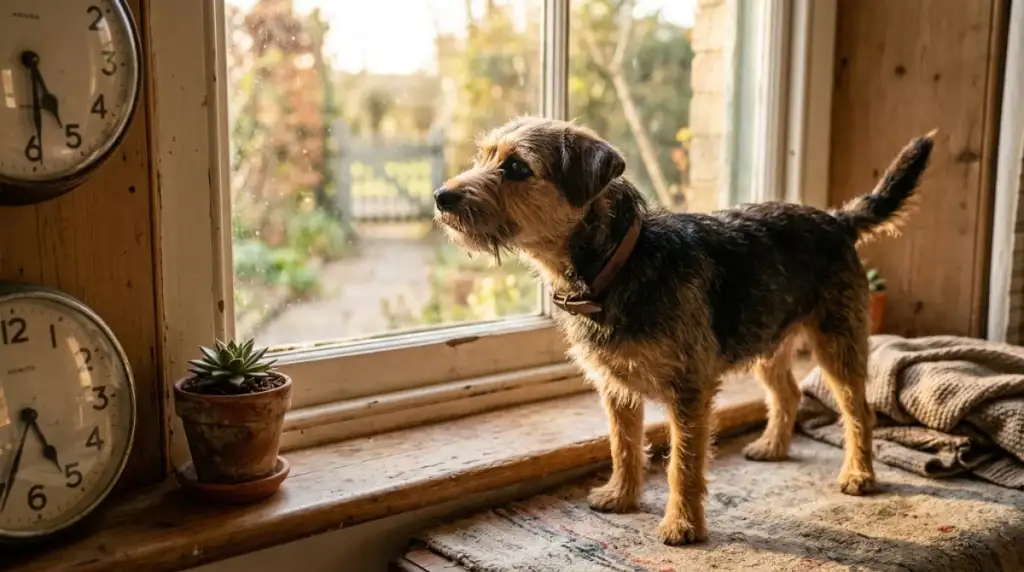
The Chief’s Report: Why is the Dog Waiting by the Door?

As the undisputed chief of the SnoutScoop household—a responsibility I bear with quiet, black-furred dignity—I spend a substantial portion of my day observing my subordinates. While I, Pisino, manage our home with sharp focus and a touch of dramatic flair, my canine companions are… simpler creatures. Take Blu, for instance. He is a delightful, high-energy Griffon Bleu de Gascogne rescue who spends half his day chasing his own tail and the other half waiting for our humans to return.
But here is the mystery that even puzzled me for a brief, fleeting second: how does Blu know exactly when our humans are about to walk through the door? He doesn’t wear a watch. He certainly can’t read the kitchen clock. Yet, like clockwork, he positions his goofy self by the entryway just minutes before the car pulls into the driveway. Is it magic? A canine “sixth sense,” as some might call it? (Though if you want to read more about the concept of a sixth sense, Deep English has a fascinating take on it). No, it is not magic. As it turns out, dogs can literally smell the passage of time.
The Olfactory Hourglass: How Scent Decays
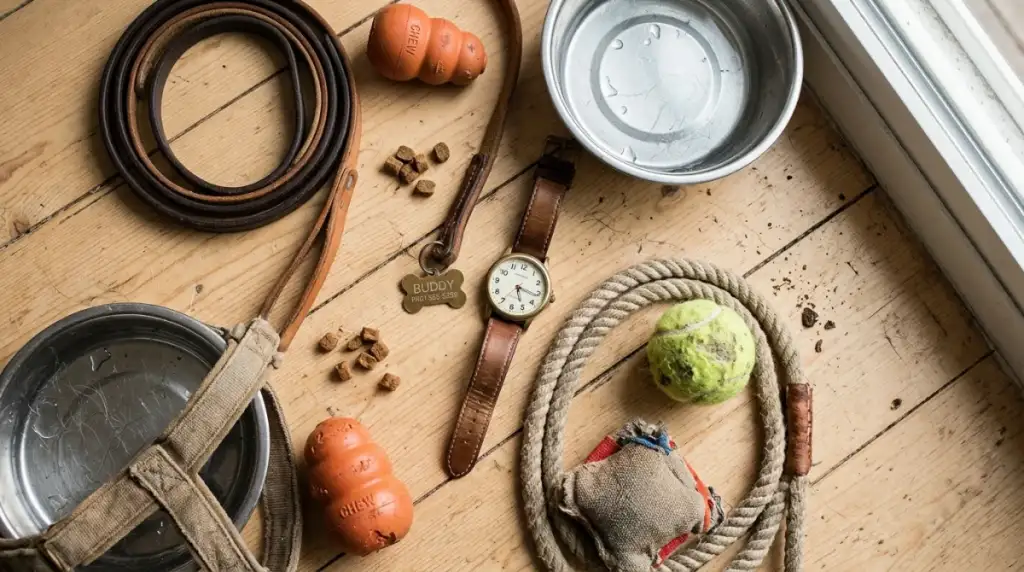
To understand this, you have to realize that humans live in a world of sights and sounds, while dogs live in a world of scents. When you leave the house in the morning, you leave behind a massive, invisible cloud of “you.” It coats the sofa, floats in the hallway, and clings to the air. But the moment you walk out the door, that scent begins to change.
According to cognitive scientist Alexandra Horowitz, whose research is highly regarded in the canine community, dogs use the decay of scent to measure time. As the hours tick by, your unique scent molecules slowly evaporate, dilute, and drift away. Your dog isn’t just sitting there missing you; they are actively tracking the fading concentration of your smell. To a dog, a strong scent means “human left recently,” while a weak scent means “human has been gone for a long time.” For a deeper dive into how this olfactory timeline works, you can check out the Exploratorium’s spectrum blog on how dogs smell time.
Think of it as a physical hourglass, but instead of sand falling, your scent is slowly evaporating. By the time the scent dilutes to a specific, predictable level, your dog knows from daily routine that this is the exact moment you usually open the door. It’s an incredibly precise, biological way of keeping time that makes my own impeccable schedule look casual.
The Physics of Air Currents and Fading Aromas
But how do these scent molecules move around the room to create this chronological map? It all comes down to basic physics and indoor air currents. During the day, warm air rises and cool air falls, moving scent molecules around your home in predictable patterns. As the sun moves across the sky and the temperature in your house shifts, your lingering scent shifts with it.
As highlighted by Now I Know, this movement of air helps dogs establish a timeline of your absence. They can sense how the air smells in different parts of the room at different times of the day. When the scent reaches a certain low threshold in the hallway, the internal alarm goes off. If you want to explore the biological mechanics of this further, Nutri-Paw’s guide on whether dogs can smell time offers some brilliant insights into their olfactory mapping capabilities.
Can We Fool the Canine Clock?
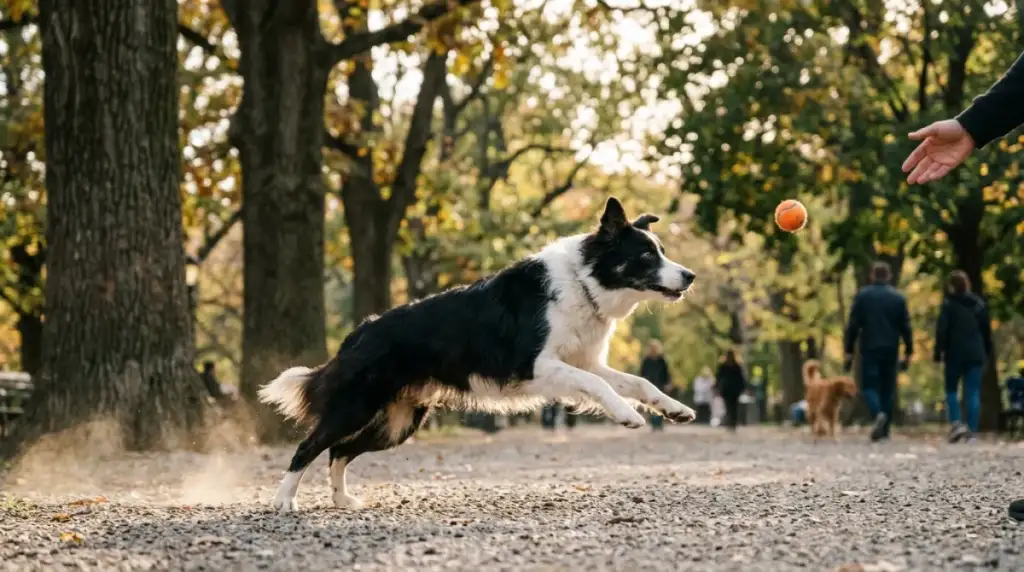
Now, being a cat of science and mild mischief, I wondered: can we trick this nose-clock? The answer is a resounding yes. Researchers have actually tested this theory by playing a bit of a trick on our canine friends.
In one experiment, researchers took dirty t-shirts belonging to the owners and placed them in the house midway through the day, artificially boosting the owner’s scent back to “freshly departed” levels. The result? The dogs were completely bamboozled. They did not wait by the door at the usual time because their noses told them the owner had only just left. For those curious about the exact setup of these behavioral studies, Animal Cognition provides an excellent breakdown of these temporal scent experiments. It proves that their sense of anticipation is directly linked to the strength of your aroma, rather than just an innate cosmic clock.
Even on community platforms like Reddit, dog owners frequently share stories of how their dogs get confused when their routines are disrupted by sudden scent changes or weather shifts that alter air circulation. You can read some of these real-world owner observations on this r/dogs thread about how dogs understand time.
More Than Just a Nose: Routine and Circadian Rhythms
Of course, while the nose is the primary tool, it’s not the only way dogs navigate their day. Dogs, like cats (and even humans, if they try hard enough), have strong circadian rhythms. They respond to physical cues like the angle of the sun, the rumbling of their own stomachs, and the sounds of the neighborhood—like the mail carrier arriving or the school bus dropping off kids.
As noted in an article by the American Kennel Club (AKC), dogs combine their internal biological clocks with their incredibly sensitive noses to build a highly accurate picture of the day. This combination of sensory inputs is also discussed on Impact Dog Crates, showing how a structured environment helps anxious dogs feel more secure because they can predict what comes next based on these reliable sensory milestones.
The Chief’s Final Thoughts
So, the next time you walk through the door and find your dog waiting for you with a wagging tail and an expression of pure, unadulterated joy, remember: they didn’t just guess you’d be home. They tracked your fading essence throughout the day, waiting for the exact moment when the air smelled just right to welcome you back.
It’s almost poetic, isn’t it? Even when you are gone, your dog is living in the memory of your scent, counting down the minutes until you return. I, of course, show my affection in more sophisticated ways—like sitting on your keyboard when you try to work—but I have to hand it to the dogs. Their clocks are pretty impressive. Now, if you’ll excuse me, I must go supervise Blu. He’s currently sniffing a couch cushion with intense concentration, and I need to make sure he doesn’t eat it.