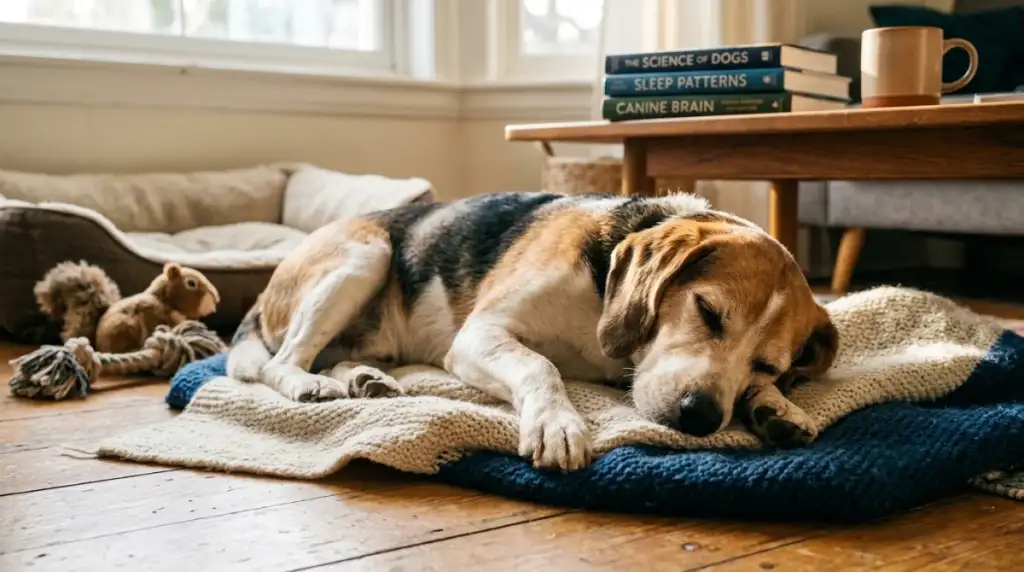
As the undisputed, highly sophisticated chief of the SnoutScoop household—yes, I am a cat, thank you for noticing—I spend a significant portion of my day observing my canine subordinates. While I sleep with the absolute grace and quiet dignity befitting a sleek black cat, my dog roommate, Blu, sleeps like an overturned folding table. He twitches, he paddles his paws, and he emits these muffled, ridiculous “boof!” noises into his pillow.
Naturally, this got me thinking. When Blu is busy running a marathon in his sleep, is he actually dreaming? Or is his brain just misfiring after a long day of sniffing fire hydrants? Being the intellectual of the house, I decided to dig into the scientific literature to find out what is actually happening inside that furry, chaotic head of his.
As it turns out, the science behind canine sleep is incredibly fascinating—and yes, dogs absolutely do dream.
The Architecture of Canine Sleep: Inside the Dog Brain
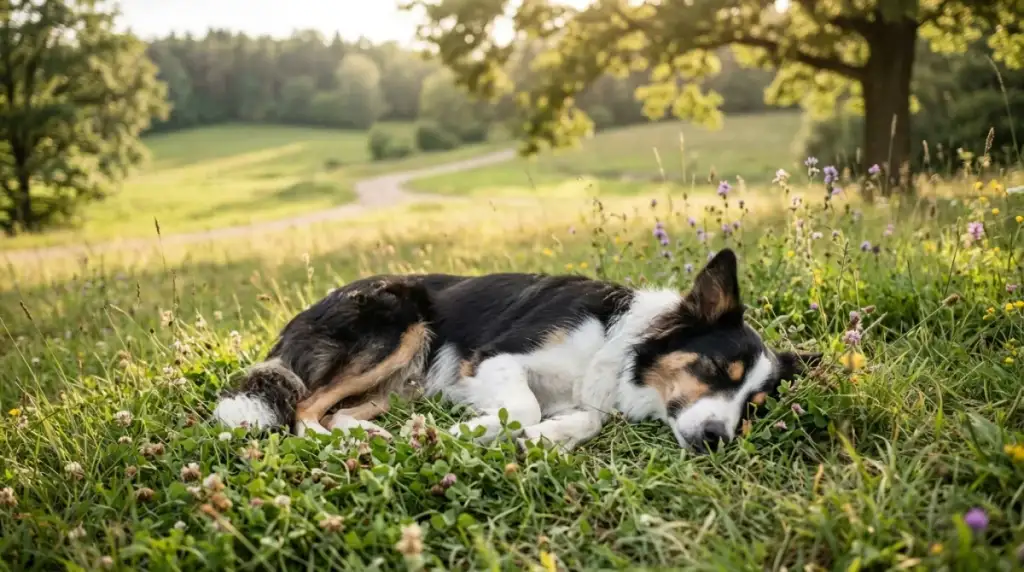
To understand canine dreams, we have to look at how dogs sleep. Just like humans (and superior feline species), dogs experience different stages of sleep. According to veterinary experts at VCA Hospitals, canine sleep cycles are divided into two main phases:
- SWS (Slow-Wave Sleep): This is the initial, light stage of sleep where the brain waves are slow and relaxed. Your dog is resting, but their mind is still relatively alert to surrounding sounds.
- REM (Rapid Eye Movement): This is the deep, active stage of sleep. During REM, the brain waves are highly active, resembling those of an awake state. This is precisely the phase where dreaming occurs.
But how do we know their brains look like ours when they snooze? Scientists have used electroencephalograms (EEGs) to monitor canine brain activity. A breakthrough study co-authored by researchers like Sara Szakadat, published on ResearchGate, demonstrated a clear link between canine sleep patterns, EEG activity, and learning consolidation. When dogs learn new commands or have an eventful day, their brains replay these experiences during sleep to solidfy memory. Yes, your dog is literally studying in their sleep!
What Do Dogs Dream About?
Since dogs can’t wake up and tell us about their late-night adventures over a bowl of kibble, scientists had to get creative to figure out the subject of their dreams.
One of the most famous pieces of research involves a tiny part of the brain stem called the pons. The pons is responsible for paralyzing your muscles during sleep so you don’t act out your dreams. As explained by the American Kennel Club (AKC), when researchers temporarily deactivated the pons in sleeping dogs, the dogs began to physically act out their dreams.
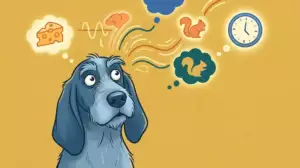
And what did they do? They didn’t start calculating physics equations. Instead, pointers started pointing, retrievers started fetching imaginary balls, and hounds began searching for invisible trails. Essentially, dogs dream about dog things. They dream about the walk they took earlier, the squirrel that mocked them from the safety of a oak tree, and probably the delicious aroma of the dinner you dropped on the kitchen floor.
According to insights from Vet Saglik, because dogs rely heavily on their sense of smell, their dreams are likely highly olfactory. While humans dream in vivid visual sequences, Blu is probably dreaming in a glorious, multi-layered tapestry of scents.
Size Matters: Why Chihuahuas Dream More Than Great Danes
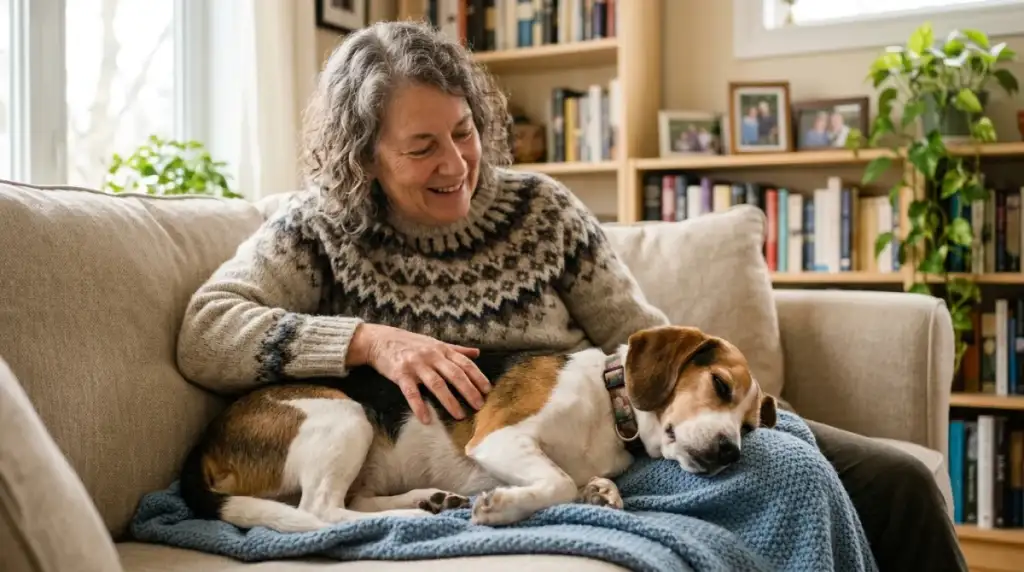
Here is a piece of trivia that blew my whiskers back: not all dogs dream equally. The frequency and duration of canine dreams depend heavily on the dog’s size and age.
1. The Size Factor
According to research highlighted by Vet-Organics, small dogs have much shorter and more frequent sleep cycles. A Toy Poodle might experience a new dream every 10 minutes, whereas a massive Great Dane might only dream once every 90 minutes. However, when the Great Dane does dream, the dream lasts much longer.
2. The Age Factor
Puppies dream significantly more than adult dogs. This is because puppies are constantly absorbing brand-new information about the world around them. Their brains are working overtime to categorize sights, sounds, smells, and social rules. All of this processing happens during the deep REM cycles, making their sleep incredibly active and twitchy.
Why Does My Dog Twitch, Whimper, and Bark in Their Sleep?
If you see your dog’s paws paddling or hear them whimpering, don’t panic. As noted by the AKC’s guide on sleep twitching, these movements are completely normal physical manifestations of the REM cycle. The motor cortex in the brain is sending signals to the limbs, and occasionally, a few of those signals slip past the pons, resulting in a twitching snout, a kicking leg, or a soft bark.
These movements are signifiers of healthy cognitive function, showing that your dog’s brain is successfully processing the day’s events.
The Golden Rule: Let Sleeping Dogs Lie
It can be tempting to wake your dog up when they start whimpering or shaking in their sleep, thinking they are having a terrible nightmare. However, experts strongly advise against this.
According to the pet care authorities at Oasy, interrupting a dog during deep REM sleep can be highly disorienting. If suddenly startled out of a vivid dream, a dog can wake up in a state of confusion or fear. In that split second, they may not recognize where they are or who you are, which can lead to involuntary defensive behaviors like growling, snapping, or biting.
If you genuinely feel your dog is having a distressful nightmare and you must intervene, do not touch them. Instead, gently call their name from a safe distance or make a soft sound to slowly ease them back into consciousness.
Pisino’s Concluding Thoughts
So, there you have it. The next time you see your dog twitching, kicking, and making those silly little noises, you can rest easy knowing that their brain is simply doing its job—processing a happy day of playing fetch, eating treats, and occasionally being outsmarted by me, the cat.
Now, if you’ll excuse me, all this scientific analysis has exhausted me. I am going to curl up in the sunbeam and show Blu how a true professional takes a nap. Sleep well, pups!